The Best Brushes for Paint by Numbers
We may earn a commission when you buy through links on this page, at no extra cost to you. How this works.
You need two kinds of brush for paint by numbers: a tiny round with a sharp point for edges and small cells (size 0, 00 or 000), and a slightly larger round or small flat for filling bigger areas. Synthetic bristles, short handles. That's it. Everything else is a nice extra.
Kit brushes are the most common reason people get frustrated with this hobby. They lose their point after an hour, splay into a little broom, and suddenly every cell has paint slopping over its edges. A cheap set of decent detail brushes fixes that.
What to look for
Synthetic bristles
Acrylic paint is hard on natural hair. Synthetic brushes (often listed as taklon or nylon) hold their shape, clean up easily and cost less. Every brush on this page is synthetic.
A point that stays sharp
The single most important quality. A good detail round comes to a fine tip when wet and springs back after each stroke. Cheap brushes have a few stray hairs that stick out sideways, which is exactly what ruins clean edges.
The right sizes
- 000 or 20/0: for the tiniest cells, eyes, whiskers
- 0 and 00: everyday edges and small cells
- 2 to 4 round: filling medium areas
- Small flat or angle (4 to 6): big areas like skies and backgrounds
Short handles and a good grip
Long handled brushes are made for standing at an easel. For paint by numbers you're working close up, so short handles give better control. Triangular handles are worth it if you paint for long stretches. They stop the brush rolling in your fingers.
Which shape for which cell
Brush shape matters more than people expect. A quick cheat sheet:
- Round with a fine point: edges, corners, small and medium cells. Your main brush.
- Liner or script brush: long thin bristles that hold more paint for long skinny areas like branches, hair strands or fence posts.
- Small flat: straight edges and big areas. Turn it on its side for a clean line along a straight border.
- Angle (angular flat): gets into the corner of a cell and cuts a crisp edge in one stroke. Nice for buildings.
- Filbert: a flat with a rounded tip. Fills medium areas without leaving hard brush marks.
You don't need all of these. A couple of rounds plus one small flat or angle covers 95 percent of any pattern.
Our picks for detail brushes

Golden Maple Miniature Brushes, 15 Pieces
A big range of tiny detail sizes in one set, originally made for model painters. Ideal for 30+ color patterns with very small cells.
View on Amazon
PANDAFLY Detail Brush Set, 15 Pieces
Fine detail brushes with triangular handles, which help a lot during long sessions. A good all round upgrade from kit brushes.
View on Amazon
Anezus Tiny Detail Brushes, 30 Pieces
Thirty brushes in sizes 0, 00 and 000. Cheap enough to treat as consumables, so you always have a sharp one ready.
View on Amazon
ZEM Golden Taklon Miniature Detail Set
Includes very fine liners down to 20/0. For outlines, hair and anything where a normal 000 still feels too big.
View on Amazon
Artify Extreme Detail Brush Set, 10 Pieces
Ten detail brushes in different shapes with a carrying bag. A good gift for someone who already paints a lot.
View on Amazon
Miniature Brushes With Triangular Handles, 6 Pack
Listed specifically for paint by number. A small, budget set that's perfect to tuck in with a kit as a gift.
View on AmazonBrushes for filling bigger areas
Detail brushes are slow for large areas like skies. A couple of small rounds and flats in better quality pay off here.
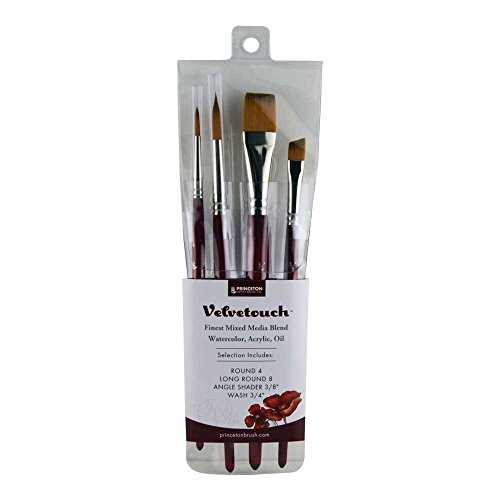
Princeton Velvetouch Series 3950, Set of 4
Soft synthetic brushes from a respected maker, made for acrylic. They lay down smooth paint in medium and large cells without streaks.
View on Amazon
Transon Artist Brush Set of 12
A simple mixed set of rounds and flats in common sizes. Covers the filling side of a project without spending much.
View on AmazonTechnique for clean edges
Even a great brush makes a mess if you hold it wrong. A few habits:
- Load only the tip. If paint reaches halfway up the bristles, you've loaded too much.
- Touch the edge of the cell first, pulling the paint toward the line rather than pushing it across.
- Rest your pinky or the side of your hand on a dry part of the canvas (or a paper towel) to steady your stroke.
- Turn the canvas instead of your wrist. Painting along an edge at a comfortable angle is much easier than contorting your arm.
- For tiny cells, think of the brush as a pen. Dab, don't sweep.
Are kit brushes worth keeping?
Keep them, just not for detail. Once a kit brush loses its point, it's still perfectly good for filling large areas, stirring paint, or mixing colors on the palette. That saves your good detail brushes for the work that needs them.
Caring for your brushes
Good brushes only stay good if you look after them.
- Never let acrylic dry in the bristles. Rinse every time you switch colors and whenever you stop, even for five minutes.
- Don't leave brushes standing bristles down in water. It bends the tip permanently.
- Don't push paint into the metal ferrule. Load only the front half of the bristles.
- Wash with brush soap at the end of each session, reshape the tip with your fingers and let them dry lying flat.

The Masters Brush Cleaner and Preserver
A classic brush soap that removes acrylic and conditions the bristles. Small tub, lasts a long time.
View on AmazonHow many brushes do you actually need?
For a typical 11x14 project: two detail brushes (a 0 and a 00), one 000 for the tiny bits, and one size 2 or 4 round for filling. Having a spare detail brush is useful, since the point eventually wears down.
If you're painting a custom pattern with the free PaintNumbered tool, your detail level setting changes this. Lower detail means bigger minimum areas, so you'll use the fill brushes more. Higher detail means you'll live on the 00 and 000.
Make a pattern from your own photo
Free and private. Your photo never leaves your device, and the printable PDF is ready in under a minute.
Open the free generatorPutting together a full kit? See the supplies checklist and paint guide.
FAQ
What size brush is best for paint by numbers?
A size 0 round with a sharp point handles most cells. Add a 000 for the tiniest areas and a size 2 to 4 round or small flat for large ones.
Why do my kit brushes leave messy edges?
They lose their point quickly and stray bristles stick out sideways. Replacing them with synthetic detail brushes usually fixes it right away.
Can I use watercolor brushes?
Synthetic watercolor brushes work with acrylic. Natural hair watercolor brushes don't hold up well to acrylic and are expensive to ruin.
How do I fix a brush that dried with acrylic in it?
Soak the bristles (not the handle) in brush soap and warm water, then work the paint out gently. If it's really stiff, a brush cleaner made for dried acrylic can help, but some brushes don't recover.