How to Transfer a Paint by Numbers Pattern to Canvas
We may earn a commission when you buy through links on this page, at no extra cost to you. How this works.
The quickest reliable way to get a printed pattern onto canvas is graphite transfer paper: tape the printout over the canvas, slide a transfer sheet underneath, and trace every line with a pen. That works on stretched canvas, panels and paper. If you're working on canvas paper, a light box is even faster.
Below are all five methods, when each one makes sense, and the small mistakes that ruin an afternoon of tracing.
Before you start: print at the right size
Print the outline at the exact size of your canvas. If you made your pattern with the PaintNumbered tool, you can download the PDF in Letter, A4, 8x10, 11x14 or 16x20 inches. Pick the one that matches your surface, and check your printer settings say "actual size" rather than "fit to page", or the outline will shrink a little.
For 11x14 and 16x20, a print shop will print the PDF on large paper. It's usually a quick black and white job.
Method 1: Graphite transfer paper
Best for: stretched canvas, canvas panels, anything you can't see through.
- Tape the top edge of the printout to the canvas with masking tape, so it hinges like a book page.
- Slide a sheet of graphite transfer paper underneath, graphite side down.
- Trace every line with a ballpoint pen, a stylus or a hard pencil. Press firmly but not hard enough to dent the canvas.
- Lift a corner now and then to check the lines are coming through.
- Write the numbers in last, small and light.
Stretched canvas gives under pressure. Put a book or a stack of cardboard behind it so the canvas doesn't bounce while you trace.

MyArtscape Graphite Transfer Paper, A4
Wax free graphite that erases and doesn't smear into paint. A4 sheets cover a Letter or A4 print in one go.
View on Amazon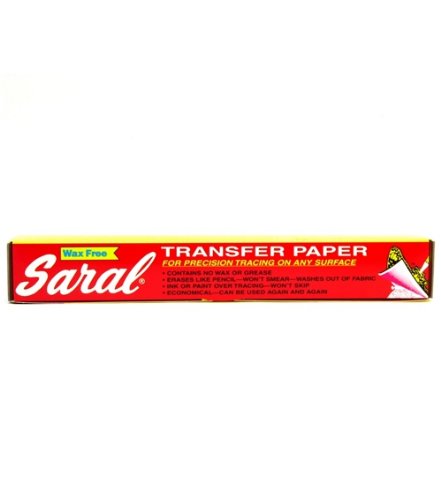
A long standing choice among artists for crisp, erasable lines. Good when you're tracing several large canvases.
View on Amazon
Carbon Transfer Paper, 200 Sheets With 5 Styluses
A big pack plus ball tip styluses, which trace cleaner lines than a pen. Carbon paper is darker than graphite, so trace lightly.
View on AmazonA warning about carbon paper: it can be waxy and harder to erase, and dark lines may show through pale paint. Graphite is the safer choice for light colored areas.
Method 2: Light box
Best for: canvas paper, thin canvas panels, tracing paper.
Put the printout on the light box, the canvas paper on top, and trace the lines you can see glowing through. No transfer sheet, no pressure, much faster. It doesn't work well on stretched canvas or thick panels because the light can't get through.

A thin, USB powered A4 light pad with adjustable brightness. Covers Letter and A4 prints.
View on Amazon
A slightly bigger tracing area than A4, so an 8x10 or Letter print fits with margin around it.
View on AmazonMethod 3: A sunny window
The free version of a light box. Tape the printout to a window, tape the canvas paper over it and trace. Works on bright days, gets tiring on your arms, and is fine for one or two pieces.
Method 4: Projector
Best for: big canvases (16x20 and up), or several canvases.
Project the outline onto the canvas on a wall or easel and trace the lines with a pencil. The hard part is keeping everything perfectly still, because if the canvas or projector moves a millimeter halfway through, the lines stop lining up. Mark the corners with tape on the wall and floor.

Art Projector for Tracing and Drawing
Built for tracing images onto paper, walls and canvas. Worth it if you paint large canvases often, overkill for one gift.
View on AmazonMethod 5: Print straight onto canvas paper
Best for: practice runs and anything that will go in a frame.
Some inkjet printers can feed canvas paper or heavier art paper. Check your printer's maximum paper weight before you try (and do one sheet first). If it works, it's the cleanest outline you'll get, because there's no tracing at all.

Strathmore 300 Series Canvas Paper Pad, 9x12
Canvas textured paper made for acrylics. Easy to trace on a light box, and some printers will feed it directly.
View on Amazon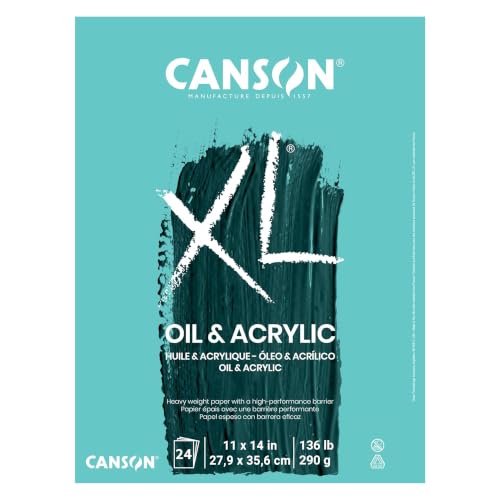
Canson XL Oil and Acrylic Pad, 11x14
A heavier paper pad in the 11x14 size, so it matches the 11x14 PDF exactly.
View on AmazonWhich method should you pick?
If you're doing one canvas, use graphite paper. If you're working on canvas paper or doing several small pieces, a light box pays for itself in saved time. A projector only makes sense for big canvases or if you do this often. And if your printer handles heavy paper, try printing directly first because it skips tracing entirely.
Quick comparison
| Method | Surface | Speed | Cost |
|---|---|---|---|
| Graphite paper | Any | Medium | Low |
| Light box | Paper, thin panels | Fast | Low to medium |
| Window | Paper | Medium | Free |
| Projector | Any, best for large | Medium | High |
| Direct print | Canvas paper | Fastest | Low |
Handling the numbers
Numbers are the part people get wrong. It's an easy fix though. Dark or heavy numbers show through yellow, white and pale blue, even after two coats.
- Write numbers in pencil, small and light.
- In tiny cells, skip the number. Keep the printed outline and colored preview next to you and check them instead.
- Never write numbers in pen or marker on the canvas.
- Erase stray graphite before you paint the light colors.
Should you trace every line?
Yes, unless two neighboring cells are the same color by mistake. Skipping lines because "it's just background" usually leads to confusion later. Tracing a typical 11x14 pattern takes one to three hours, so put on a podcast. Or two.
If your pattern has more cells than you have patience for, go back to the tool and lower the detail level. Bigger minimum areas mean fewer lines to trace and fewer tiny cells to paint.
Make a pattern from your own photo
Free and private. Your photo never leaves your device, and the printable PDF is ready in under a minute.
Open the free generatorStill planning the project? Start with how to make paint by numbers from a photo and the supplies checklist.
FAQ
Can I trace onto stretched canvas with a light box?
Not really. Light doesn't get through primed canvas well enough. Use graphite transfer paper for stretched canvas.
Will graphite lines show through paint?
Light graphite lines are usually covered by two coats of acrylic. Pale yellows and whites may need a third thin coat. Erasing extra graphite before painting helps.
What can I use instead of transfer paper?
Rub a soft pencil over the back of the printout, flip it over and trace the front. The graphite on the back transfers to the canvas. Slower, but it works in a pinch.
How do I keep the printout from shifting?
Tape the top edge only, so you can flip it up to check your work and it always drops back in the same place.